Insights on strategy, performance and growth
Practical guidance for directors and operators, from setting direction and OKRs to building team alignment and measuring what matters.
Why Clients Cancel Advisory Services and How to Prevent It
Advisory cancellations rarely surprise partners who miss early signals. Most are preventable with visibility and proof.
How to Prove the Value of Advisory to a Client Every Month
Directors renew advisory when they can point to progress. Monthly proof beats quarterly eloquence.
The Advisory Tech Stack: What Does an Accountancy Practice Actually Need?
Practices stack bookkeeping, reporting, and slide tools. Advisory needs a shorter list tied to client outcomes.
Why Your Advisory Service Shouldn't Live in Excel, PowerPoint and Email
Every advisory client has a folder of models, decks, and threads. Partners know the workflow does not scale. Clients feel it too.
Accountants vs Business Coaches: Who Should Own SME Advisory?
Directors ask coaches for motivation and accountants for truth. The firm that combines both wins recurring advisory revenue.
The Accountant Already Knows More About the Business Than Most Consultants
Directors hire consultants for clarity. Their accountant already holds years of verified context. The gap is packaging, not intelligence.
The Advisory Gap: Accountants Have the Data, But Who Owns the Decision?
Your practice sees every invoice, payroll run, and month-end adjustment. Clients still ask who should own the decisions that follow.
Why AI Could Make Good Accountants More Valuable, Not Less
Partners worry AI will commoditise bookkeeping and tax. The opposite is more likely for firms that combine automation with client context and advisory rhythm.
The Accountancy Practice of 2030: What Are Clients Actually Paying For?
Accountancy practice 2030 what clients pay for: five capabilities directors will fund, what commoditises, and how UK firms should reposition now.
Your Clients Are Already Using ChatGPT. What Does That Mean for Your Practice?
Clients using ChatGPT accountancy practices already: risks, what directors ask AI, and five responses to stay the accountable adviser.
Can AI Actually Help Accountants Deliver More Advisory?
Can AI help accountants deliver advisory at scale? A practical value map, governance checklist, and worked capacity example for UK practices.
The Advisory Upsell Email: How to Start the Conversation With Existing Clients
Advisory upsell email template accountants can reuse: three copy-paste emails, subject lines, and send rules for warm, nurture, and post-diagnostic outreach.
How to Introduce Advisory to Existing Accounting Clients Without Making It Feel Like an Upsell
How to introduce advisory without upsell feel: client-anchored scripts, diagnostic sessions, and timing rules for UK accountancy practices.
How to Identify Which Accounting Clients Are Ready for Advisory
How to identify clients ready for advisory with an eight-factor scorecard, worked examples, and Ready/Nurture/Hold bands your client managers can use this week.
Why Your Existing Client Base May Be More Valuable Than Your Next 100 Leads
Why the existing client base more valuable than leads for UK accountancy firms: acquisition vs upsell economics and a penetration metric partners can track this week.
200 Clients. 20 Advisory Relationships. £96,000 in New Revenue.
The 200 clients advisory revenue scenario for UK practices: 20 clients at £400/month, quarter-by-quarter conversion, and delivery maths partners can run this week.
How Many Clients Does Your Practice Need to Add £100k in Advisory Revenue?
How many clients for 100k advisory revenue your practice needs: worked fee tiers, conversion rates, and partner capacity checks you can use this week.
A Complete 12-Month Advisory Framework for Accountancy Firms
A documented 12 month advisory framework accountancy firms can follow quarter by quarter, with phases, OKRs, and renewal proof your partners can actually deliver.
The Accountant's Advisory Meeting: What Should Actually Happen?
Partners and managers run different meetings under the same "review" label. A clear accountant advisory meeting structure saves prep time, sets client expectations, and stops advisory calls drifting into unstructured finance lectures.
From Numbers to Action: The Missing Step in Most Accounting Relationships
Accountants see the numbers first. Directors still stall. The gap from numbers to action accounting relationships need is not more analysis. It is ownership, deadlines, and visible follow-through on what was agreed.
Why Business Owners Ignore Their Management Accounts
You send management accounts on time. The director nods on the call, then makes decisions without them. Understanding why business owners ignore management accounts is the first step to fixing engagement, not sending longer packs.
Why Management Accounts Aren't the Same as Business Advisory
Directors say they want "better numbers". Partners wonder why management accounts vs business advisory still get conflated in proposals, pricing, and client expectations. The distinction matters for margin, delivery, and what you promise.
Your Clients Don't Need Another Quarterly PDF
Your team spends days building management packs. Directors skim the email, file the PDF, and ask the same questions at the quarterly call. Clients dont need quarterly pdf advisory delivered as a static attachment. They need visibility that moves when the business moves.
From Annual Accounts to an Ongoing Business Relationship
The annual accounts meeting is often the only deep conversation many practices have with client leadership all year. Smart firms use that moment to move from annual accounts to ongoing business relationship without awkward upsell language.
What Does a Scalable Advisory Practice Actually Look Like?
Partners ask what a scalable advisory practice accountancy firms can actually sustain looks like in operational terms, not slideware. The answer is not "more partners" or "more hours". It is a system where revenue grows faster than senior time.
How to Train Your Accounting Team to Have Better Advisory Conversations
Client managers know the ledger. Many still freeze when a director asks, "So what should we actually do?" Training your team to train accounting team advisory conversations is the difference between reporting and trusted guidance.
Why Advisory Shouldn't Depend on Your Most Experienced Partner
Your best partner gives clients confidence, sharp interpretation, and decisions that stick. That is valuable. It is also fragile when advisory should not depend on senior partner availability for every conversation.
How to Deliver Advisory Without Adding Hours of Partner Time
You want to grow advisory revenue, but every new client relationship seems to need another hour from a partner. The operational question is how to deliver advisory without partner hours becoming the bottleneck that caps growth.
The Problem With Advisory: It Doesn't Scale
Advisory revenue hits a partner-hours ceiling when delivery stays bespoke. Five scale blockers, the maths, and a standardised rhythm checklist for UK firms.
How to Productise Advisory Inside an Accountancy Practice
Bespoke advisory stalls at ten clients. Productise advisory with an 80/20 delivery model, six-step path, and role RACI so managers scale the rhythm.
7 Advisory Services Accountancy Firms Can Sell to Existing Clients
Seven named advisory services accountancy firms can sell from their existing client base, with fee bands and delivery owners for each SKU.
How to Package Business Advisory as a Service Clients Will Actually Buy
Directors reject vague advisory proposals. Package business advisory with the PACK framework and a one-page scope template directors approve in one meeting.
What Should an Accountancy Firm Actually Charge for Business Advisory?
SME directors buy fixed advisory programmes, not day rates. Three tiers, UK fee bands, and ROI anchors for accountancy firm business advisory pricing.
You've Been Told to "Move Into Advisory". But What Does That Actually Mean?
Move into advisory is not a mood. It is a second delivery system for priorities, cadence, and proof. Here is what it means in practice for UK accountancy firm partners.
How to Turn Accounting Clients Into Recurring Advisory Revenue
Most practices already give strategic advice for free. Here is how to turn accounting clients into advisory revenue with a five-step conversion path and conversation script.
The £100k Opportunity Already Sitting in Your Client List
You do not need hundreds of new leads to add £100k in advisory revenue. Model penetration on your existing client list, segment the top prospects, and run a ten-client pilot.
AI Isn't Replacing Accountants. It's Changing What Clients Will Pay Them For
AI is changing what clients pay accountants: less for undifferentiated compliance, more for verified decisions tied to live priorities. A repricing guide for UK firm partners.
What Will Your Clients Pay You For When Compliance Isn't Enough?
Compliance margins are compressing while clients still want faster decisions and accountability between closes. Here is what clients pay accountants beyond compliance, with a practical value map for UK firm partners.
AI in UK Accounting: What SME Directors Should Know
UK accountants are adopting AI fast and expect the biggest wins in efficiency and advisory work. Here is what SME directors should expect from that shift, and how to connect it to live KPIs and priorities.

Clausewitz, Friction, and the Strategy-Execution Gap
Clausewitz taught that plans meet friction in the field. The strategy-execution gap in SMEs is the same problem. Here is how to reduce it with systems, not slogans.

Playing to Win: Strategy Choices and Execution Systems
Playing to Win frames strategy as five choices. SMEs often stop at four and miss management systems. Here is how to operationalise all five in execution.

Elevale vs GoHighLevel: Reseller and Affiliate Models Compared
HighLevel and Elevale both offer 40% recurring referral commission and white-label resale. Compare affiliate terms, SaaS Mode vs Partner Programme economics, product scope, and which model fits your clients.

The Art of War and Strategy Execution: Lessons for Business Leaders
The Art of War is not about fighting harder. It is about clarity, focus, and winning through judgment. Here is how Sun Tzu's principles apply to strategy execution in growing businesses.

20 Strategy Execution Problems for Directors
Is your business on track? Twenty strategy execution problems UK directors recognise when growth outpaces informal leadership, and why they need signal, not another task manager.

The 3 Traps That Keep Good Businesses Stuck
Good businesses get stuck when teams are busy but not moving strategic priorities, plans restart instead of compounding, and decisions never become owned actions. Here are the three traps and how to escape them.

Not Another Task Manager: Why You Need Strategy Execution, Not More Task Lists
Task manager fatigue is rational. Most businesses already have delivery covered. The gap is connecting strategy, OKRs, KPIs, accountability, and execution so leadership can see whether work is working.

Leading vs Lagging KPIs for SMEs
Lagging KPIs tell you what happened. Leading indicators tell you what to do next. Here is how small businesses balance both without metric overload.
The 4 Disciplines of Execution and the Whirlwind
The whirlwind of daily work defeats strategy unless you focus on wildly important goals, act on lead measures, keep a scoreboard, and hold accountability. Here is how 4DX maps to Elevale.
The Goal: Theory of Constraints for Strategy Execution
Improving everything does not improve the business. The Goal teaches constraint thinking for strategy execution: identify the bottleneck, align OKRs, and subordinate orphan work.
Good Strategy/Bad Strategy: Rumelt for Business Execution
Rumelt's kernel (diagnosis, guiding policy, coherent action) maps almost perfectly to direction, objectives, and linked execution. Here is how to apply it in a growing business.
Strategy Books for Business Execution: What to Read and Apply
Classic strategy books train judgment. This hub maps the best texts to strategy execution: direction, objectives, KPIs, actions, and reviews, with dedicated guides for the strongest Elevale fits.
Strategy Drift: Researching Execution in UK SMEs
UK SMEs lack evidence on how strategy really executes. The Strategy Drift research programme will survey directors and publish The State of Strategy Execution in UK SMEs 2027. Here is how to take part.
Monday and Asana Manage Tasks. Who Manages the Strategy?
Monday and Asana manage tasks brilliantly. Strategy lives elsewhere: slides, spreadsheets, or memory. Here is who should manage strategy when task tools own delivery.
Task Management vs Strategic Execution: What's the Difference?
Task management answers whether work gets done on time. Strategic execution answers whether that work moves the priorities leadership chose. Here is the difference, and when growing businesses need both.
Not Another App: Stop Adding Software to Fix Fragmentation
App-stack fatigue is rational. Each new tool adds licences, integrations, and handoffs. Consolidate where leadership reviews priorities, KPIs, and execution.
Not Another Reporting Tool: What Needs to Happen Next
Reporting tool fatigue is rational. Directors need live KPI and OKR visibility with owners and follow-through, not another backward-looking export.
Not Another OKR Tool: Connect Objectives to the Full Stack
OKR tool fatigue often reflects disconnected architecture: goals in one app, tasks in another, KPIs in finance. Strategy execution connects the full stack.
Not Another Productivity Hack: Fix Alignment, Not Inboxes
Productivity hack fatigue is justified. Growing companies need ranked priorities and aligned execution, not another morning routine template.
Not Another Meeting: Turn Decisions Into Actions
Meeting fatigue is about follow-through, not the calendar. Decisions fade when nobody logs owners, tasks, and metric targets tied to what was agreed.
Not Another To-Do List: Tasks Must Connect to Objectives
To-do list fatigue reflects a deeper problem: busy teams completing tasks while company key results stall. Link work to objectives or flag it as orphan activity.
Not Another Planning Tool: Execution Beats Another Plan
Planning tool fatigue is rational. Most businesses can produce a plan. Few sustain weekly execution, ownership, and review that proves the plan is working.
Not Another AI Chatbot: AI That Knows Your Business Context
Generic AI chatbots cannot see your OKRs, KPIs, or decisions. Context-aware AI inside your strategy execution workspace answers from what leadership actually reviews.
Not Another Strategy Deck: Keep Direction Alive Between Meetings
Strategy deck fatigue is real. Decks align in workshops then vanish. Directors need direction that stays live between board meetings.
Not Another Dashboard: Turn KPIs Into Decisions, Not Charts
Dashboard fatigue is rational. Directors need KPIs connected to priorities and follow-through, not another visualisation layer with numbers nobody acts on.
Weekdone Alternatives for UK SMEs
Weekdone earns its reputation for weekly OKR rhythm, but growing UK SMEs often need strategy direction, live KPIs, and delivery linkage beyond PPP reports. Here are the best Weekdone alternatives and when to switch.
What Is KPI Tracking Software?
KPI tracking software is the layer that keeps directors aligned on whether the business is on track between board meetings. Here is what it does, how it differs from other tool categories, and when a growing business needs it.
Perdoo Alternatives for UK SMEs
Perdoo remains a credible OKR platform, but growing UK SMEs often need more than objectives and check-ins. Here are the best Perdoo alternatives when KPI disconnect, board reporting, or delivery linkage pushes you beyond OKR-only software.
OKR Software Comparison (UK, 2026)
Choosing OKR software in 2026 means comparing more than check-in features. This UK comparison covers dedicated OKR tools, strategy execution platforms, and work tools with goals modules so directors can shortlist with confidence.
OKRs vs KPIs: When to Use Which
OKRs and KPIs answer different questions. Directors who conflate them end up with too many metrics or objectives that never connect to live performance. Here is when to use which, and how to run both in one rhythm.
Monday.com for OKRs: When It Works and When It Breaks
Many SMEs start OKRs inside Monday.com because delivery already lives there. That works until KPI disconnect, check-in drift, or director reporting forces a dedicated strategy execution platform.
Best KPI Tracking Software for Small Businesses (UK)
The best KPI tracking software for a small business connects live metrics to leadership decisions, not just dashboards nobody opens. Here is how UK directors evaluate options and shortlist tools that fit growing companies.
Board Reporting Software for SMEs
Board reporting software should give directors a live picture of business health, not another slide deck rebuilt from spreadsheets every month. Here is what to look for and how tool categories compare for growing companies.
Goodbye Quantive: What the Workboard Acquisition Means for Your OKRs
Quantive is no longer an independent OKR platform. Workboard absorbed the product after its 2025 acquisition, and many teams are re-evaluating whether enterprise consolidation fits a growing business. Here is what changed, what to expect, and where directors go next.
Goodbye Microsoft Viva Goals: What Happens Now
Microsoft Viva Goals is gone. If OKRs lived inside Teams, your leadership team needs a new home for objectives, check-ins, and KPI visibility before the next quarterly review. Here is what the shutdown means and how to move on without losing cadence.
Best OKR Software for Small Businesses (UK)
The best OKR software for a small business connects objectives, KPIs, and weekly check-ins without enterprise complexity. Here is how to evaluate options and shortlist tools that fit UK growing companies.
What Is Strategy Execution Software?
Strategy execution software connects direction, objectives, KPIs, actions, and leadership reviews so directors can see whether the business is moving on its priorities without reconciling four tools first.
OKR Implementation Guide for Small Businesses
OKR implementation succeeds when leadership commits to a repeatable rhythm, not a one-off workshop. This guide walks small businesses through readiness, rollout, check-ins, scoring, and when software earns its place.
OKR Software Pricing Comparison (UK, 2026)
OKR software pricing varies widely by seat count, feature tier, and whether you need OKRs only or full strategy execution. This 2026 comparison shows per-user costs at common UK SME headcounts.
Best Strategy Execution Software for Small Businesses (UK)
The best strategy execution software for a small business connects direction, OKRs, live KPIs, and team alignment in one platform. Here is how UK directors evaluate options and shortlist tools that fit growing companies.
Microsoft Viva Goals Alternatives: What to Use After Shutdown
Microsoft Viva Goals is shutting down, and teams need a replacement that preserves OKR cadence without losing M365 context. Here are the best alternatives, migration steps, and how to evaluate platforms for UK SMEs.
Notion, ClickUp and Asana for OKRs: When It Works and When It Breaks
Many SMEs start OKRs inside Notion, ClickUp, or Asana because the team already lives there. That works until KPI disconnect, check-in drift, or director reporting forces a dedicated strategy execution platform.
The Best Affiliate Marketing Platform for Agencies, Coaches and Accountants
The best affiliate marketing platform for agencies, coaches, and accountants matches how you earn trust: recurring commission on software clients keep using, or white-label resale when they expect your brand on the product.

One-Page Strategic Plan Template
A one-page strategic plan keeps direction visible. Use this template to capture where you are going, what matters this year, and how you will measure progress.

OKR vs SMART Goals for Business
SMART goals and OKRs are not interchangeable. Here is when each approach fits a small business leadership team.

Monthly Management Meeting Agenda for SMEs
Monthly management meetings keep KPIs honest between quarterly reviews. Use this agenda to run a focused session in 45–60 minutes.
Best SaaS Reseller Programmes to Join (2026)
The best SaaS reseller programmes match how you sell: referral commission, implementation services, or white-label delivery. Compare types, top programmes, and how to choose in 2026.

Strategy Execution vs Strategic Planning
Strategic planning workshops feel productive. Execution is where small businesses win or drift. Here is the difference directors should operationalise.
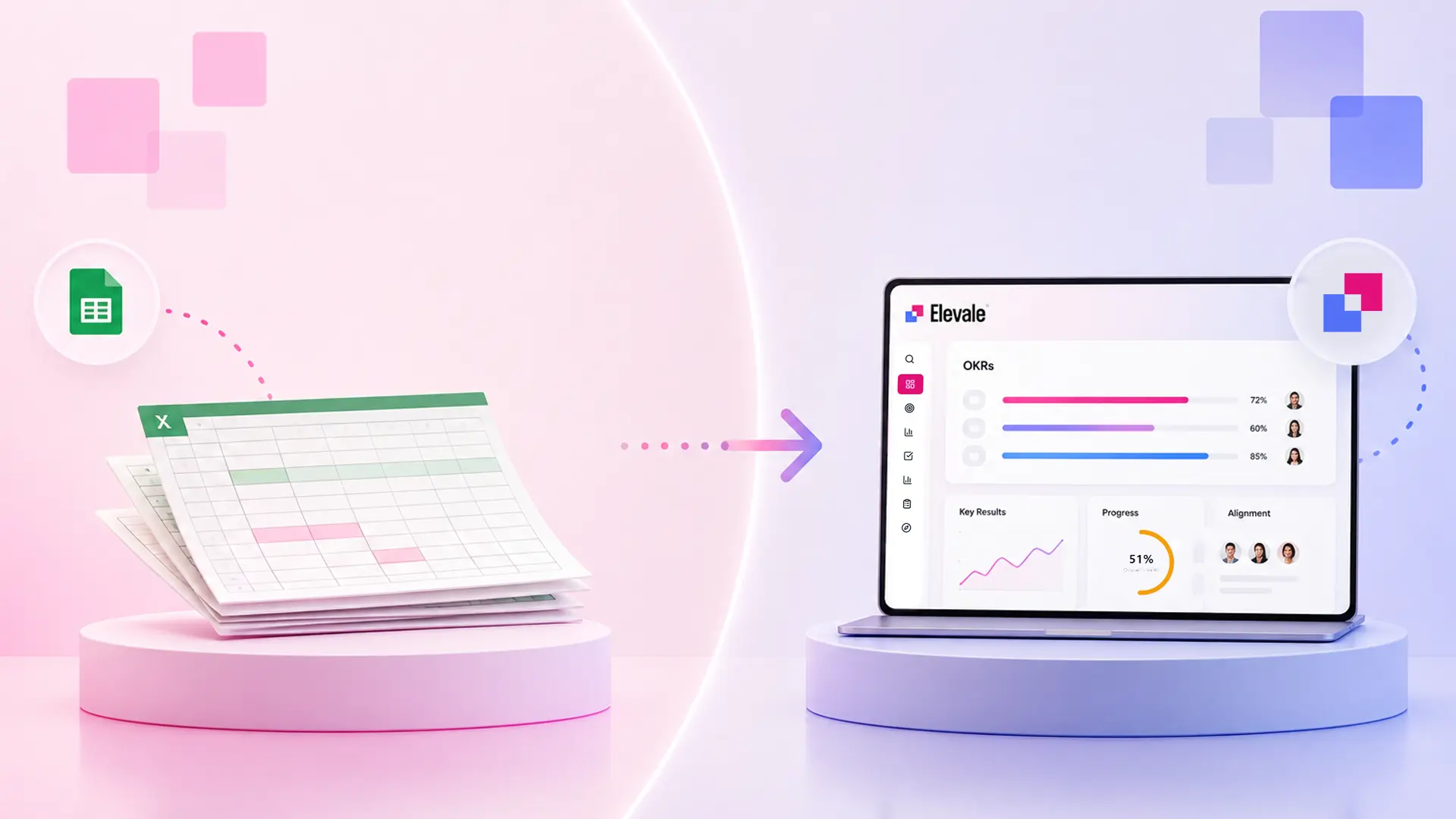
When to Move OKRs from Spreadsheets to Software
Spreadsheets are a fine starting point for OKRs. This guide explains when small businesses typically outgrow them and what to prioritise in a platform.
Best Affiliate Programmes to Join (2026)
The best affiliate programmes pay recurring commission on products you would recommend anyway. Compare types, top programmes, lifetime vs capped payouts, and how to choose in 2026.

Best OKR software for small businesses
The best OKR software for a small business connects objectives, KPIs, and weekly check-ins without enterprise complexity. Here is how to evaluate options and shortlist tools that fit UK growing companies.
The Hidden Cost of Context Switching (and Tool Sprawl)
Workers toggle between apps 1,200 times a day and lose hours reorienting. Here is the switching cost tool audits overlook, and how teams fixed it by consolidating projects, docs, chat, and AI.
Strategic Planning Process for Small Businesses
Strategic planning does not require a six-month programme. small businesses can run a focused process that produces direction, priorities, and measures.
Project Management vs Strategic Execution
Project tools excel at delivery. Strategic execution asks whether delivery serves the direction leadership chose. directors need both lenses.
Measuring Business Health Beyond Revenue
Revenue can grow while the business weakens. directors need a wider view of health: alignment, delivery, pipeline, and retention.
Management Accounts vs KPIs: What Directors Need
Management accounts and KPIs answer different questions. directors need both, but not two versions of the same story rebuilt every month.
How to Prepare a Board Pack for a Growing Company
Board packs for growing businesses should inform decisions, not drown directors in narrative. Here is a practical structure that scales from 10 to 80 people.
How Many OKRs Should a Small Company Have?
Too many OKRs dilute focus. Too few hide blind spots. Here is how many objectives and key results work for small companies.
How to Cascade Company Goals to Teams
Company goals only work when team leads can explain their contribution. Here is how small businesses cascade objectives without enterprise overhead.
Good KPI Examples for Small Businesses
The right KPI set depends on stage and sector. These examples cover finance, growth, and operations without tracking everything at once.
Balanced Scorecard vs OKRs for SMEs
Balanced Scorecard and OKRs both help directors track performance, but they solve different problems. Here is how to choose for a Growing Company.
What a Fractional COO Should Track in the First 90 Days
Fractional COOs have 90 days to earn trust. These are the metrics, meetings, and priorities to establish first in a SME.

Strategy vs OKRs vs KPIs: What's the Difference?
Directors often conflate strategy, OKRs, and KPIs. Here is how each layer works, and why you need all three connected in one execution system.

Why OKRs Fail in Small Businesses (and How to Fix Them)
OKRs fail quietly in small businesses: workshops finish, spreadsheets fill, and by week six nobody updates progress. Here is why that happens and what to change.

Team Building Activities: Why They Matter and How to Build Cohesion Into Everyday Work
Team building is not a quarterly away day. It is how people share direction, own outcomes, and celebrate progress every week. Here is why it matters and how to build it into everyday work.

OKR Examples for Small Businesses
Generic OKR templates rarely fit a growing company. These worked examples show how objectives and key results look in agencies, trades, and professional services.

How to Run a Weekly OKR Check-In
Quarterly OKRs need a weekly rhythm. This guide shows how leadership teams run OKR check-ins that people actually attend.

Weekly Leadership Team Meeting Agenda
Weekly leadership meetings work when they focus on decisions, not status theatre. Use this agenda to keep your team aligned between quarterly reviews.

Quarterly Business Review Agenda
A quarterly business review should leave your leadership team aligned on priorities, not buried in slides. Use this agenda to run a focused QBR in 60–90 minutes.

How to Set OKRs for a Small Business
A practical OKR framework for small businesses and growing leadership teams, without enterprise complexity or a six-month rollout.

How to Set KPIs for a Small Business
Most small businesses track too many numbers or the wrong ones. Here is a practical way to choose KPIs, set targets, and review them without rebuilding spreadsheets every month.
No articles match your search. Try different keywords.
Your next quarter deserves action, not another spreadsheet.
Start your 14-day free trial and connect direction, OKRs, team alignment, and live intelligence in one command centre. No setup circus. No app-switching.